Modern Design Minimal Style Infographic
A minimal infographic does more than look clean. It strips away visual noise so the core message stays front and center. For project leads, content creators, marketers, and educators, a Modern Design Minimal Style Infographic template becomes a practical tool that shortens the gap between raw data and a finished, shareable graphic. Instead of starting from a blank canvas, you get a structured starting point that already respects spacing, typography, and visual rhythm. This article walks through how such a template fits into real workflows, when to reach for it, and what makes it a dependable asset across different stages of a project.
Understanding the Role of a Minimal Infographic in Visual Communication
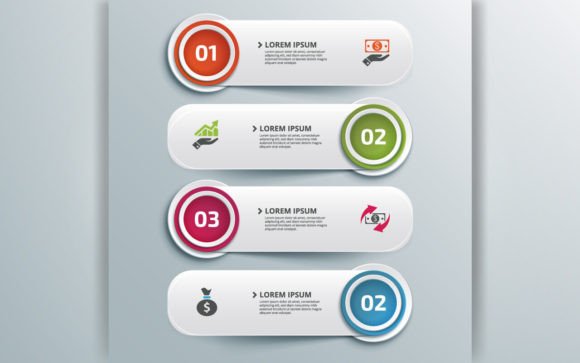
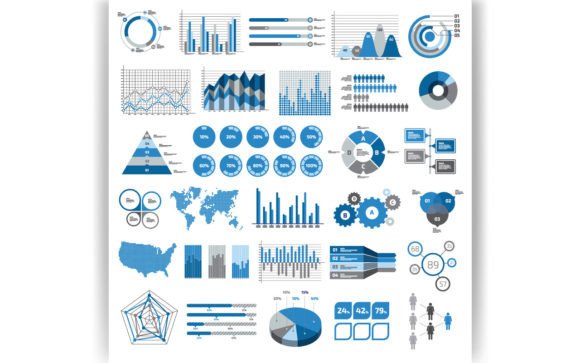
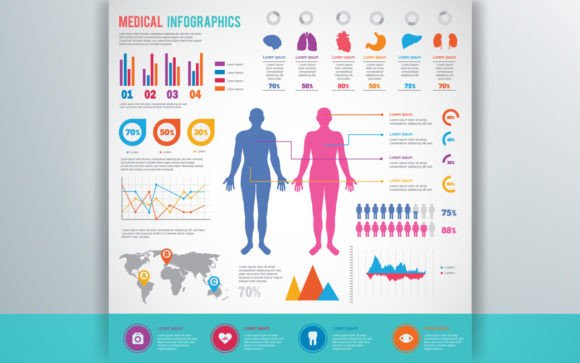
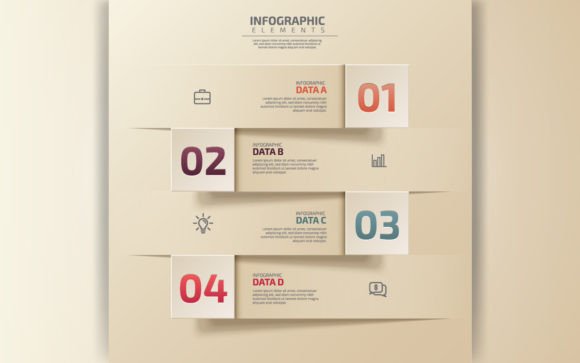
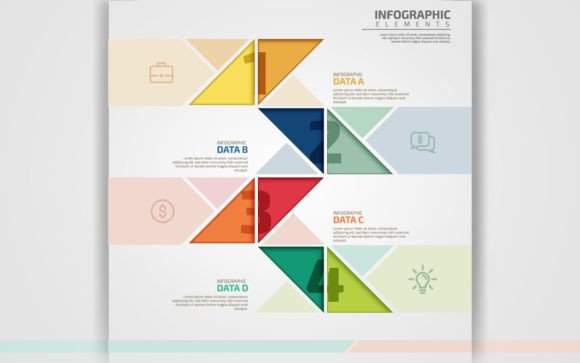
Minimalism in design is not about doing less for the sake of it. It is about intentionality. Every line, every number, and every shape serves a purpose. A Modern Design Minimal Style Infographic template embodies that philosophy. It usually includes clean number banners, horizontal cutout lines, and straightforward layout zones that guide the eye without overwhelming the viewer. For someone who needs to present quarterly metrics, summarize a process, or highlight key steps, this template reduces the cognitive load both for the designer and the audience.
Because the design avoids heavy gradients, excessive icons, or cluttered typography, the information itself becomes the focal point. That makes it especially useful in environments where readers scan quickly—social media feeds, email newsletters, slide decks, or blog posts. The template’s numbered banners, for example, can turn a list of features into a visual sequence that feels intuitive rather than forced.
Where a Minimal Infographic Template Fits in Your Project Lifecycle
Most people think of infographics as a final output—something you create once the data is locked and the copy is final. In practice, a Modern Design Minimal Style Infographic can serve just as well during planning and drafting stages. Because the template offers a clear structure, you can drop placeholder text and rough numbers into it early on. This does two things: it exposes gaps in your logic, and it gives stakeholders a tangible preview before you invest in custom illustrations or detailed data visualization.
During a project’s execution phase, the template works as a lightweight layout engine. If you are building a presentation, you might repurpose a single numbered banner as a standalone slide. If you are writing a report, you could extract a cutout line graphic to separate sections. After a project wraps, the same template can be adapted for recap summaries, social proof graphics, or onboarding one-pagers. The vector nature of the download—AI, EPS, and high-resolution JPG—means you are not locked into one use case.
Before a Campaign or Launch
You might be in the early stages of planning a product launch or a content series. At this point, a minimal infographic template can act as a wireframing tool. Open the AI file in Adobe Illustrator, place the key messages into the numbered banners, and see if the sequence flows logically. Because the design is uncluttered, any weak points in your story become obvious. You can then rearrange sections, tweak headings, or remove redundant points. This low-effort prototyping saves hours of back-and-forth later.
In team settings, share a JPG preview during a meeting. The high-resolution output is sharp enough for screen sharing, and the minimal style keeps the conversation focused on content rather than decorative details. This approach aligns with a lean workflow: iterate on information architecture before committing to extensive graphic production.
During Content Production or Client Deliverables
When you are in full production mode, the template’s compatibility with Adobe Illustrator becomes a serious time-saver. The vector AI and EPS files let you adjust colors, swap fonts, and scale elements without quality loss. If your brand uses specific hex codes, you can update the entire color palette in minutes. The horizontal cutout lines can be extended or duplicated to match your layout needs, while numbered banners can be reordered to fit a new narrative.
For educators and trainers, the minimal style translates well to both digital and print. A numbered infographic can become a handout that supports a workshop. Because the template is simple, learners focus on the steps or statistics rather than getting distracted by decorative flair. For freelance designers, the same file can anchor multiple client projects—just customize the content and branding elements, and you have a fresh deliverable.
If you work with other tools, the high-resolution JPG serves as a reliable cross-platform asset. Import it into Canva, Google Slides, Keynote, or Figma to blend with other visuals. While the JPG is not editable like the vector files, the minimalist aesthetic means you can overlay text or transparent shapes without creating visual chaos. This interoperability makes the template a bridge between specialized design software and everyday presentation tools.
After a Project Concludes
Post-mortem documents, annual reports, and case studies all benefit from clean data presentation. A Modern Design Minimal Style Infographic can summarize outcomes without making the document feel heavy. You might pull a numbered banner from the template to show a timeline of milestones, or use the cutout lines to create a simple bar-chart-like visual that illustrates growth trends.
Because the template is yours to reuse, you can build a library of on-brand graphics over time. Keep the AI master file organized, and you can spin up a new version for a different project in the future. This consistency across deliverables subtly reinforces your visual identity. Customers and colleagues start to associate that clear, unadorned style with your communication, which builds trust and recognition.
Practical Implementation and Workflow Integration
The real value of a design asset lies in how easily it slots into your existing routine. A Modern Design Minimal Style Infographic template, especially one delivered in AI, EPS, and JPG, does not demand that you overhaul your toolkit. Here are concrete ways to make it part of your daily work without friction.
- Prepare a reusable brand layer. In Illustrator, add your logo, brand colors, and preferred fonts to a separate layer. Save that as your base file. Whenever you start a new project, duplicate the file and you have a branded infographic in seconds.
- Keep a text file of common data points. If you frequently produce reports around the same metrics, store those numbers in a simple text document. You can then copy and paste them into the AI template, minimizing manual entry errors.
- Use artboards for versioning. Illustrator supports multiple artboards. Create one board for the full infographic, another for a single-number banner graphic, and a third for a stripped-down social media teaser. Export all versions from one file.
- Export to SVG for web use. While the download includes JPG, you might want to convert the AI file to SVG for websites. Vector formats ensure crisp display on high-resolution screens and improve page load times.
- Pair with other minimal assets. The template’s style plays well with simple icon sets, thin-line illustrations, and monochromatic photography. This harmony reduces the risk of a disjointed final design when you combine resources from different sources.
Compatibility and Technical Considerations
Since the product comes as an AI file, an EPS file, and a high-resolution JPG, you have flexibility regardless of software. Adobe Illustrator offers the deepest editing capability, but EPS files open in many vector programs like Affinity Designer, CorelDRAW, and even some older versions of FreeHand. If you only need to place the graphic into a presentation or document, the JPG is ready to go.
One often-overlooked factor is scalability. A minimal infographic with clean lines and bold typography remains legible even when printed on a large poster or shrunk to a mobile screen width. The vector formats guarantee that no pixelation occurs. This matters if you produce content for multiple channels—a graphic that starts as a blog illustration might end up as a trade show banner. With the template, you only need to generate the appropriate resolution when exporting, not recreate the design.
File organization is also worth mentioning. Store the downloaded AI, EPS, and JPG in a folder named after the project or template type. Add a text file with notes about color codes, font names, and any modifications you plan to apply. This small step prevents searching through cluttered folders six months later when you want to reuse the asset.
Usability Factors That Boost Efficiency
A minimal design approach helps less experienced users avoid common pitfalls. Over-decoration is a frequent mistake when building infographics from scratch. The template imposes a disciplined structure: you have placeholders for text, numbers, and simple visuals, which discourages adding unnecessary elements. This constraint actually frees you to focus on crafting clear messages.
For teams, the template serves as a shared starting point. When multiple people create content using the same base file, the output stays visually coherent even if different individuals work on separate pieces. This is especially useful for distributed marketing teams or departments where brand consistency is important but a full-time designer is not available.
Everyday tasks like creating a quick process graphic for an email or a step-by-step guide for a client become less daunting. The numbered banners in the template can be adapted in minutes. You are not inventing a layout each time; you are filling in a proven structure. This shift in workflow removes hesitation and accelerates publishing.
Observation on Long-Term Use and Asset Management
Over time, a well-chosen infographic template becomes a foundation asset. You will learn which color adjustments work best for your audience, which typography sizes read well on mobile, and which spacing tweaks make the graphic feel balanced. These micro-improvements accumulate, so the template evolves with your needs. Keep a changelog or save incremental file versions to track what you customized. This practice prevents you from losing a successful variation when experimenting with new tweaks.
The minimal style also has a timeless quality. Unlike trendy designs that feature bold color explosions or elaborate 3D elements, a clean infographic rarely feels dated. This means you can confidently use the template for projects that may be referenced years later, like educational resources or archived reports.
Bringing It All Together in Real Workflows
To illustrate how a Modern Design Minimal Style Infographic operates in practice, consider a small business owner who needs to create a customer onboarding guide. They open the AI template, replace the sample text with their five-step process, adjust the accent color to match their logo, and export the full graphic as a PDF for email and as a JPG for a web page. The whole process takes under thirty minutes. A freelance marketer preparing a quarterly report for a client might use the same template to build a one-page summary. They import the JPG into Google Slides as a background, overlay additional callouts, and deliver a polished deck without any back-and-forth with a designer.
In an educational setting, a teacher designs a visual study aid. Using the EPS file in a vector-capable program, they stretch the horizontal cutout lines to create a timeline of historical events. Students receive a clean, distraction-free reference that reinforces the lesson. Because the template is minimal, it accommodates diverse subject matter without seeming out of place.
Each of these scenarios highlights the same thread: the template acts as a force multiplier. It does not replace the need for clear thinking or accurate data, but it removes the friction of building a layout from scratch. When you trust the structural design, you spend your energy on what you do best—creating meaningful content, telling a compelling story, or making informed decisions.
Preparing for Smooth Adoption
Before you first open the AI file, take a moment to assess your typical output needs. Do you mostly create digital graphics, or do you print materials regularly? Will you need to export assets at specific dimensions? Knowing these answers helps you set up your Illustrator document preferences—color mode (CMYK for print, RGB for digital), artboard sizes, and export settings—so future sessions are faster. If you plan to use the JPG in Canva, determine the ideal pixel dimensions for your project and resize accordingly.
Consider also how you will share working files with collaborators. Vector files can be large, so a cloud storage service with version history works well. If a teammate only needs to review the content, a quick JPG export might be sufficient. Clear communication around which file type to use for which stage prevents confusion down the line.
Finally, give yourself permission to simplify. The template already embodies minimalism. If a numbered banner feels too prominent, scale it down. If the default font is not your brand typeface, swap it. The goal is a tool that adapts to you, not the other way around. Overthinking customization defeats the efficiency the template is meant to provide.
Outcome-Focused Design Without the Overhead
A Modern Design Minimal Style Infographic template goes beyond aesthetics. It is a functional part of a communication toolkit for anyone who needs to convey information clearly and quickly. By understanding its place in the project lifecycle, leveraging the AI, EPS, and JPG formats for different stages, and integrating it into daily workflows, you reduce repetitive design work and maintain visual consistency across platforms. The result is not just a pretty graphic; it is a more efficient process that lets you spend time on what truly matters—the ideas behind the design.